

At its October 2025 plenary in Paris, the Financial Action Task Force (FATF) officially announced that Nigeria has exit theFATF grey list, marking a major milestone in the nation’s financial integrity journey.
Ms. Hafsat Abubakar Bakari, Director and CEO of the Nigerian Financial Intelligence Unit (NFIU), described the decision as a “landmark achievement in Nigeria’s fight against serious financial crimes.” She noted that the FATF’s recognition reflects Nigeria’s strong adherence to international anti-money laundering and counter-terrorism financing standards.
A high-level Nigerian delegation attended the plenary. The group comprised the Attorney-General, Finance Minister, Interior Minister, and NFIU Director/CEO.
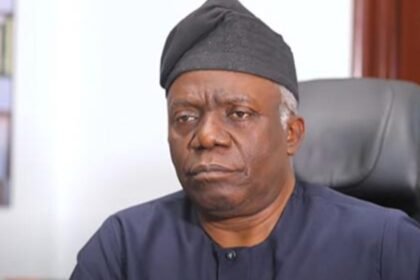
Speaking on Nigeria’s behalf, Finance Minister Wale Edun reaffirmed the government’s resolve to sustain strong anti-money laundering systems. “Nigeria’s ambition goes beyond exiting the FATF grey list,” he said. “We aim to strengthen a resilient financial framework that prevents illicit activities.”
Attorney-General Prince Fagbemi expressed appreciation to FATF for inviting Nigeria to join its guest jurisdictions initiative. This privilege enables the country, represented by the NFIU, to participate in FATF meetings for one year and contribute to shaping global AML/CFT/CPF policies.
FATF placed Nigeria on its grey list in February 2023 for weaknesses in anti-money laundering and counter-terrorism financing.
The government, working with FATF and GIABA, launched a 19-point Action Plan to combat money laundering in West Africa.
To meet FATF’s requirements, Nigeria enacted the Money Laundering (Prevention and Prohibition) Act, 2022 and the Terrorism (Prevention and Prohibition) Act, 2022. The government also launched the Beneficial Ownership Register to promote transparency in corporate structures.
Nigeria enhanced the capabilities of intelligence, law enforcement, and regulatory agencies to detect and prosecute complex financial crimes. It also strengthened supervision across both public and private sectors to prevent misuse of the financial system.