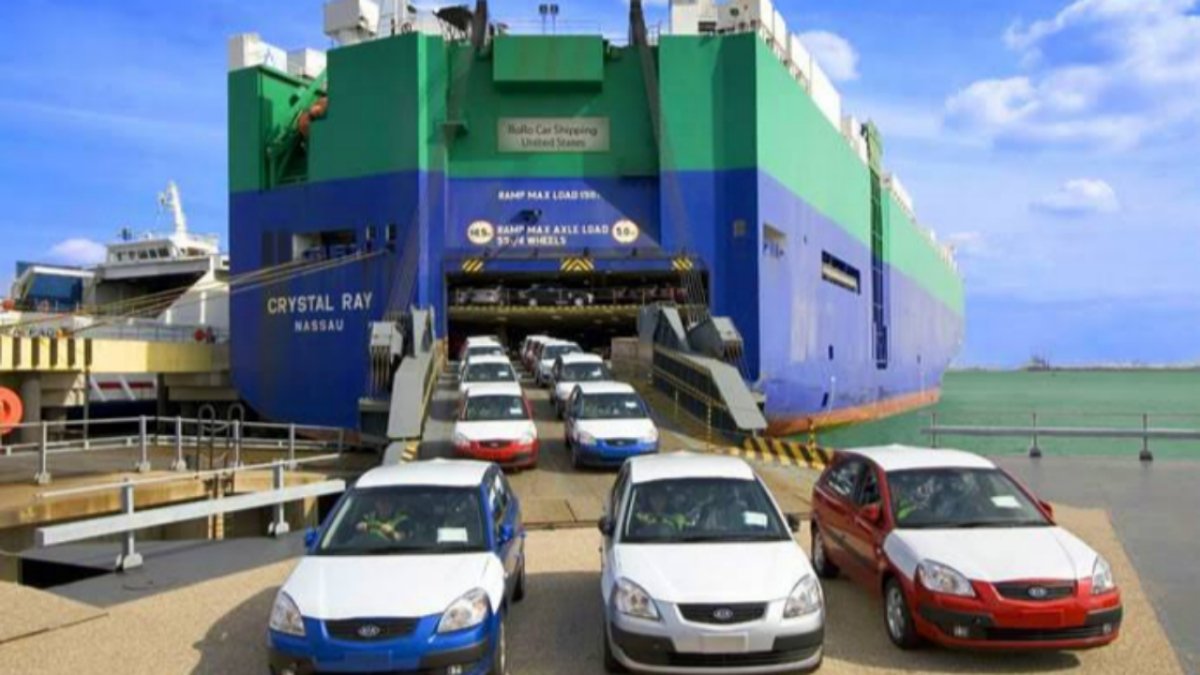


Importers, freight forwarders, and car dealers have reacted negatively to the Nigeria Customs Service’s (NCS) new 4% Free on Board (FOB) value tax on imported products. According to stakeholders, this might raise clearance costs by as much as 40%, making cars even more unaffordable for the typical Nigerian and accelerating inflation.
Since the post-COVID economic collapse, car costs have already increased by more than 350%. A used Toyota Corolla may now cost up to ₦9 million, which is more than twice as much as it did three years ago.
According to Cowrywise, the projected five-year cost of owning such an automobile in Lagos is now ₦22.7 million. Purchase, gasoline, upkeep, legal costs, repairs, and depreciation are all included in this. The overall cost remains at N18.9 million even after accounting for resale value.
The FOB, which includes the cost of the products and transportation costs up to the port of loading, is determined by the value of the imported items. Importers claim that although the new FOB-based levy, which is a component of the NCS Act 2023, replaces the former 1% Comprehensive Import Supervision Scheme (CISS) and 7% customs collection fee, its calculation ultimately makes it more expensive.
Despite a prior agreement that the current 7% fee and 1% Comprehensive Import Supervision Scheme (CISS) would be eliminated first, the contentious 4% FOB tax was added to the Customs computerized system on August 4, 2025. Surprisingly, the 7% fee is still in place even though the 1% CISS has been eliminated.
According to freight forwarders, the cost of clearing some automobiles has increased from ₦8 million to ₦14 million. A decrease in import quantities, a move toward luxury automobiles, and an increase in abandoned cars at ports as a result of excessive clearance charges are the outcomes.
A sharp drop in port activity was also seen by industry participants, who cautioned that customers are being charged more.
The NCS has refuted these allegations, pointing to strong digital tracking, yet some importers are accused of price gouging, while others battle with under-declaration and dishonest tactics to get around the system.
Bashir Adeniyi, the Customs Comptroller-General, justified the tax, saying it pays for necessary technological advancements and that the legislation makes it plain that the FOB fee now covers operating expenses.
The charge, according to critics, would hurt small firms, lower import competitiveness, and make life more difficult for regular Nigerians.
Nevertheless, if used openly and in concert with modernization initiatives, some think the FOB tax may improve the port supply chain.