


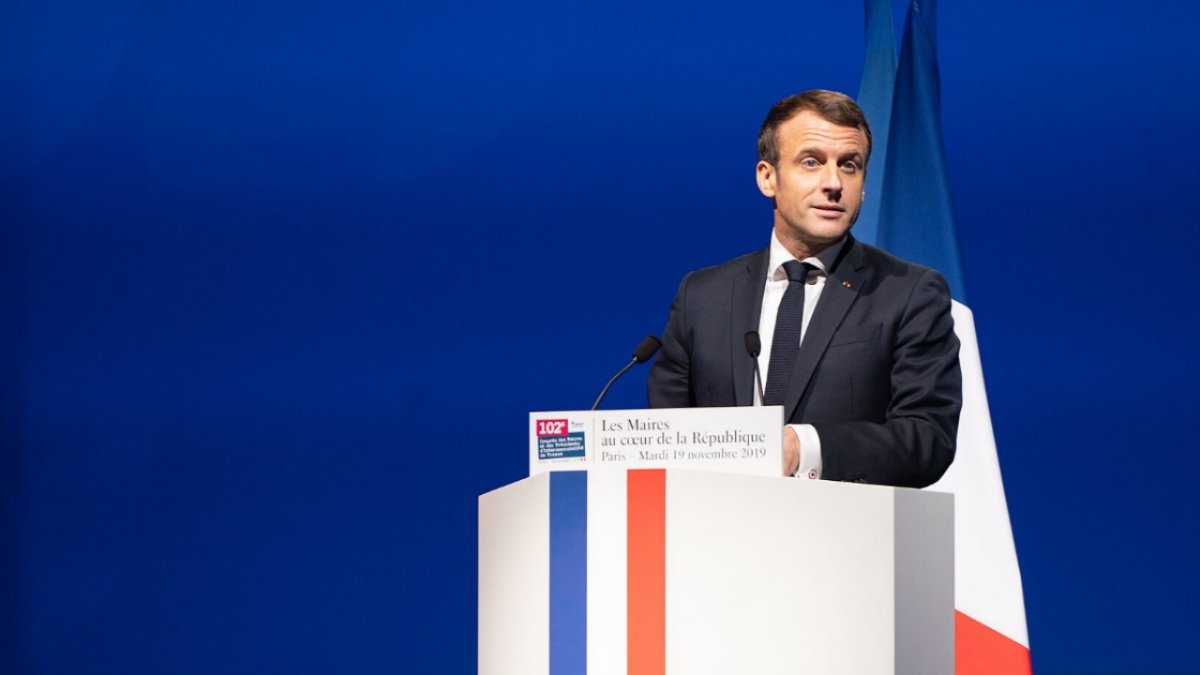


Emmanuel Macron, the president of France, declared that at the forthcoming United Nations General Assembly this September, France will legally recognize the State of Palestine. Using his official social media accounts, he made the announcement, which restates France’s long-standing support for a fair and sustainable peace in the Middle East.
“Faithful to its historic commitment to a just and durable peace in the Middle East, I have decided that France will recognise the State of Palestine,»,” Macron wrote. “I will make this solemn announcement at the UN General Assembly next September.”
Macron demanded in his statement that there be an immediate end to hostilities in Gaza, that all captives be freed, and that people receive extensive humanitarian assistance. He emphasized that although peace is possible, it will need immediate action, such as demilitarizing Hamas, securing and rebuilding Gaza, and creating a viable Palestinian state that acknowledges Israel and promotes regional stability.
“There is no alternative,” he said, highlighting the contribution France can play in demonstrating that peace is achievable together Israelis, Palestinians, and other international partners.
In addition, the French leader released a letter to Mahmoud Abbas, the president of the Palestinian Authority, in which he reiterated France’s resolve to pursue Palestinian statehood in light of the promises Abbas allegedly made to Macron. “Trust, clarity, and commitment” were emphasized by the president as essential elements for establishing enduring peace.
Nonetheless, Washington has strongly opposed Macron’s action. On social media, US Secretary of State Marco Rubio responded firmly, saying: “The United States strongly rejects Emmanuel Macron’s plan to recognise a Palestinian state at the UN General Assembly. This reckless decision only serves Hamas propaganda and sets back peace. It is a slap in the face to the victims of October 7th”
France is the latest European country to recognize the State of Palestine.
In 2024, Spain, Ireland, and Norway added their names to the list, calling for progress toward a negotiated two-state solution, something that Sweden, Poland, and the majority of Eastern European nations have long done.


