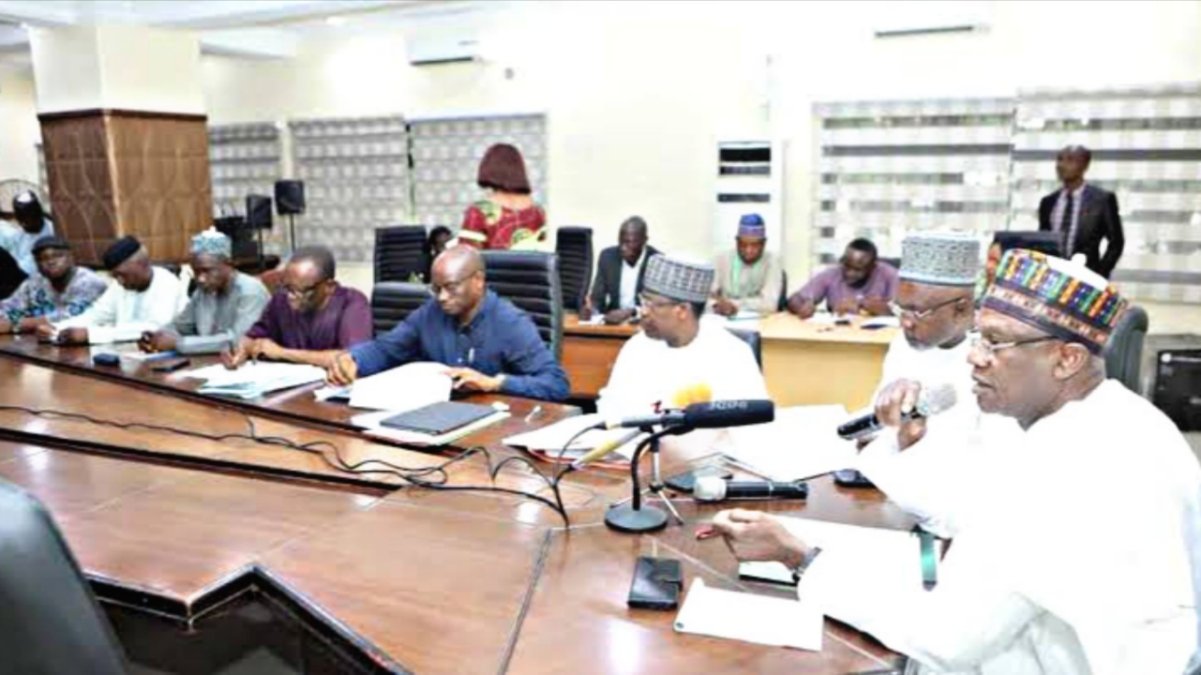

The Federal and State Governments have been warned by the Academic Staff Union of Universities (ASUU) to address long-standing problems in order to prevent an imminent industrial crisis in Nigeria’s public universities.
The union’s president, Christopher Piwuna, signed a press release expressing the growing dissatisfaction of its members, pointing to the government’s noncompliance with signed agreements, poor welfare, and insufficient funding.
Dr. Tunji Alausa, the country’s minister of education, recently declared that “never again ever in this country will ASUU or tertiary institutions, go on strike.”
Although the minister predicated this optimism on a plan of communication and addressing union demands, ASUU maintains that words must be followed by action.
The union said, “While ASUU share his optimism about dialogue and maintaining relationships, the government needs to go beyond words and act on our outstanding issues”
The union emphasized that many lecturers teach “on empty stomachs” and conduct research without access to necessary resources like books, chemicals, reagents, and electronic journals, highlighting the appalling conditions they face.
Inadequate transportation, unpaid utility bills, children’s tuition, and other financial strains are additional challenges faced by lecturers.
Professors “feel forgotten, shamed, and demoralized by past and present governments,” Piwuna said, expressing frustration at the widespread blame placed on universities for producing graduates who are unemployed in spite of these difficulties.
The Nigerian government’s disregard for collective bargaining agreements, particularly the unresolved renegotiation of the 2009 FGN-ASUU Agreement, was criticized by ASUU.
The ASUU president said, ”Agents of government at the State and Federal levels have characteristically thrown the underlying principles of the Agreement overboard and resorted to platitudes and tokenism. They pick and choose what aspect(s) of the package to “renegotiate” and implement”
Additionally, he denounced as hypocritical, government efforts to treat scholars who are looking for better working conditions as “volunteers” under programs like the “Diaspora Bridge.”
In regards to governance matters, ASUU voiced apprehension regarding political meddling in the appointment of vice-chancellors, pointing to the controversy surrounding the Acting Vice Chancellor of Alvan Ikoku University of Education, whose advancements were “filled with numerous contradictions.
The union urged Nigerian stakeholders and leaders to address the “lingering labor issues in the Nigerian University System” in order to avert another strike.