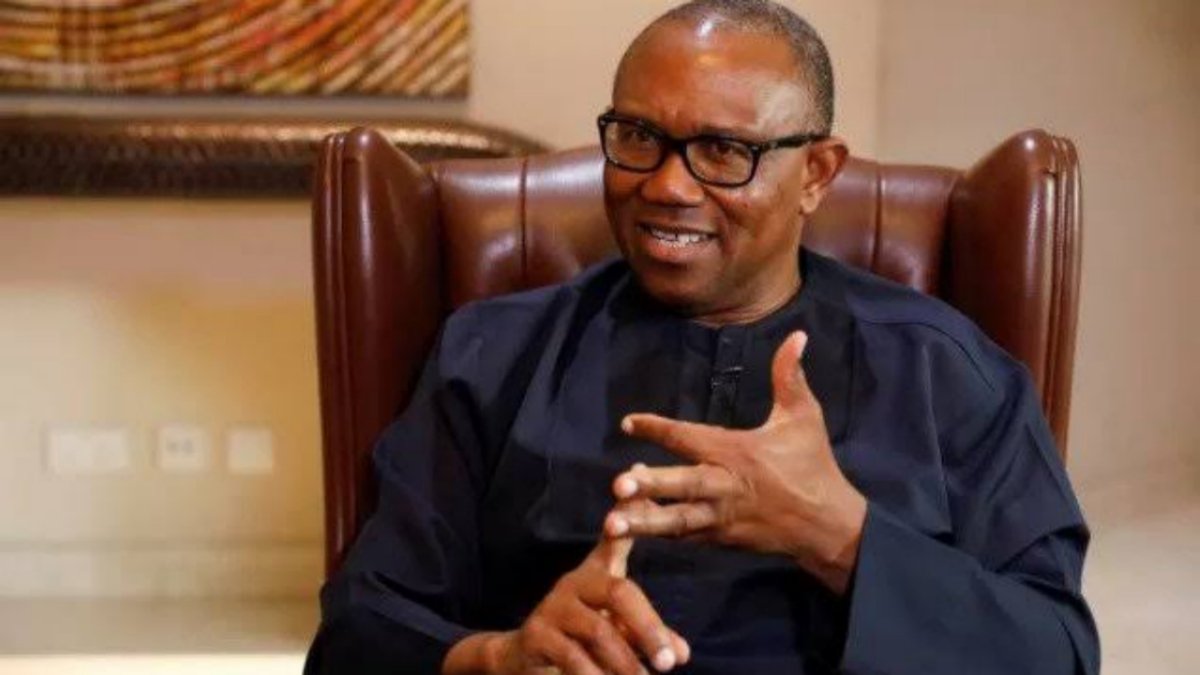

Former Labour Party presidential candidate, Peter Obi, has strongly criticized the current administration for Nigeria’s sharp decline in Foreign Direct Investment (FDI), blaming it on poor leadership and weak governance.
In a statement posted on his official X (formerly Twitter) account on Friday, Obi said sustainable economic growth and development cannot be achieved without effective governance. He argued that Nigeria’s deteriorating performance in key governance indicators, such as rule of law, regulatory quality, government effectiveness, and accountability, was driving away foreign investors.
Citing fresh data from the National Bureau of Statistics (NBS), Obi revealed that FDI fell by about 70% in the first quarter of 2025, dropping to $126.29 million from $421.8 million in the last quarter of 2024.
He also noted that out of the $5.64 billion total capital importation recorded in Q1 2025, FDI accounted for only 2.24%, down from 8.2% in Q4 2024. Even more concerning, 90% of imported capital went into speculative money market instruments, which he warned would have little impact on industrial growth or job creation due to the ease with which such funds can leave the economy.
Obi further lamented that capital flows to Nigeria’s manufacturing sector dropped by 32.1%, from $191.92 million in Q1 2023 to $129.92 million in Q1 2025. This, he said, was a clear sign of declining investor confidence in the government’s policies, which he described as “uncoordinated and largely reactive.”
“Nigeria, the so-called ‘Giant of Africa’, received only $1.08 billion in total FDI in 2024, just 1% of Africa’s total, marking a 42% drop from 2023. Worse still, between Q4 2024 and Q1 2025, FDI fell by another 75%,” Obi stressed.
In contrast, while global FDI flows fell in 2024, FDI to Africa surged to $97 billion, a 75% increase from the previous year. Egypt led the continent with $46.58 billion, followed by Ethiopia ($3.98 billion), Côte d’Ivoire ($3.80 billion), and several other nations that successfully attracted billions in investments.
Obi concluded by warning that without urgent reforms to strengthen governance, restore investor confidence, and drive real sector growth, Nigeria’s economic prospects will remain bleak.