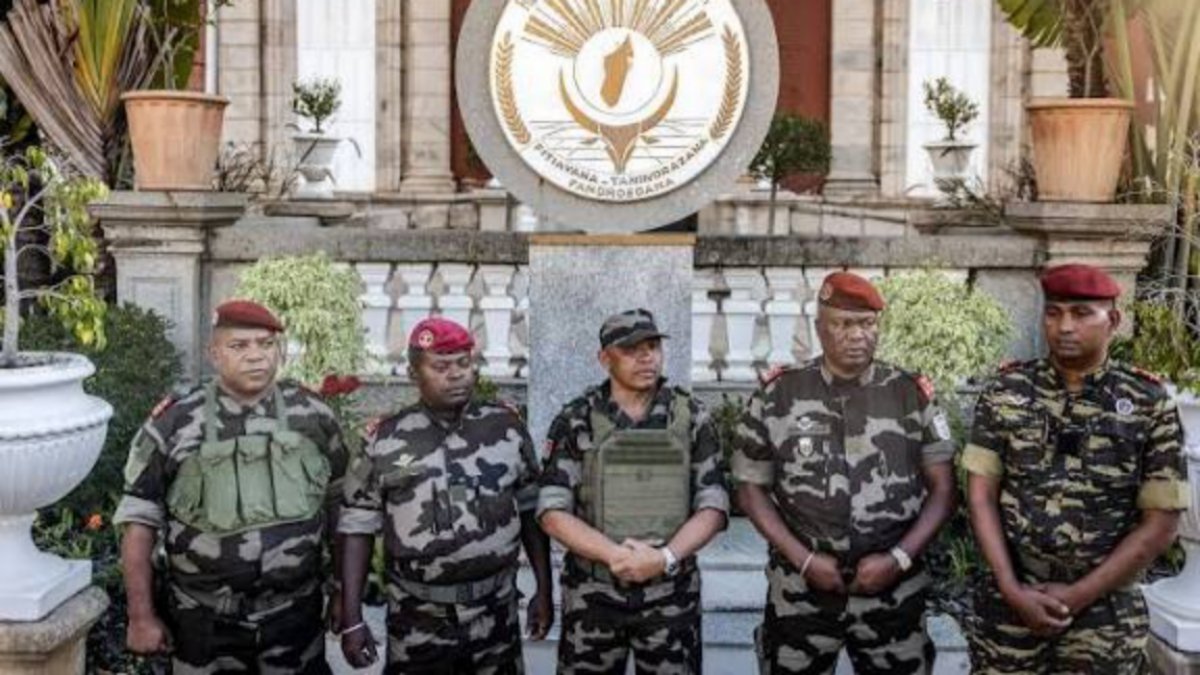

The Madagascar military seized power after President Andry Rajoelina was impeached by the national assembly for desertion of duty. An elite military force, CAPSAT, announced on Tuesday that it had assumed control of the island nation.
The 51-year-old president had gone into hiding after weeks of anti-government protests. He also rejected growing calls to resign.
Colonel Michael Randrianirina, commander of the CAPSAT unit, told AFP at a government facility in Antananarivo, “We have taken power.” He said the unit would form a committee that includes national police, gendarmerie, and army officers.
“Perhaps in time it will include senior civilian advisers. It is this committee that will carry out the work of the presidency,” Randrianirina explained.
He added, “At the same time, after a few days, we will set up a civilian government.”
The Madagascar military seized power just minutes after Rajoelina’s impeachment. The lower house of parliament voted overwhelmingly, with 130 members supporting the motion; well above the two-thirds majority required in the 163-member assembly.
Rajoelina dismissed the session as “devoid of any legal basis.” In a last-minute attempt to stop the vote, he dissolved the national assembly by decree only hours earlier. The High Constitutional Court must still confirm the impeachment.
On Monday night, the former mayor of Antananarivo said he was taking refuge in a “safe space” following alleged assassination attempts. He did not disclose his location.
The political unrest began on September 25, fueled by anger over corruption, rising prices, and alleged government neglect. Over the weekend, CAPSAT soldiers and other mutinous security officers joined demonstrators demanding the resignation of Rajoelina and several ministers.
The Madagascar military take over marks a dramatic escalation in the country’s political crisis. CAPSAT previously played a major role in the 2009 coup that first brought Rajoelina to power.
Randrianirina promised that the committee would soon transition to a civilian-led government, pledging stability after weeks of turmoil.