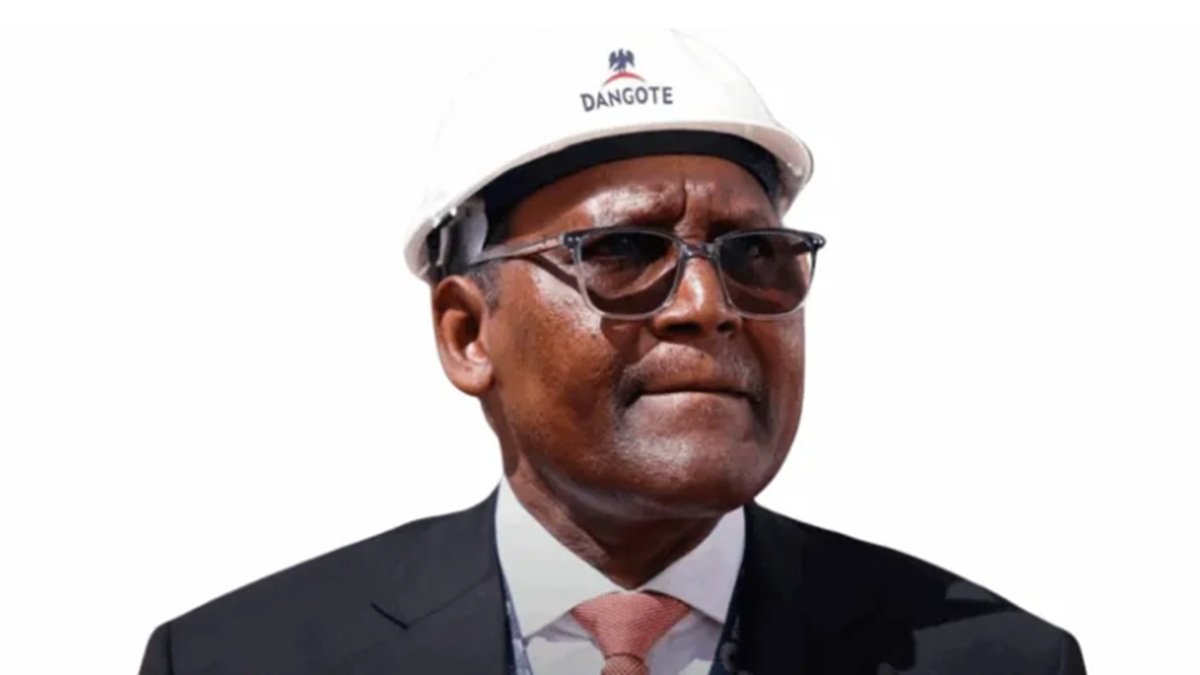

The world is filled with wealthy individuals, and many of them continuously seek to grow their fortunes by investing in high-yield ventures. While the title of the richest person may shift across other continents, one name has remained unchallenged in Africa for over a decade, Aliko Dangote. How has this one man consistently outperformed every other African billionaire for more than ten years? What’s the secret to his sustained success? In this article, we explore the remarkable journey of Alhaji Aliko Dangote, uncovering how he rose to become the richest man in Africa and how he continues to expand his influence. Grab a snack, because you’re about to discover some powerful business insights.
Who Is Aliko Dangote?
Aliko Dangote is widely celebrated as the richest man in Africa and the richest Black man in the world. Born in Kano, Nigeria, on April 10, 1957, to Mohammed Dangote and Mariya Sanusi Dantata, Dangote comes from a wealthy lineage. His great-grandfather, Alhaji Alhassan Dantata, was once the richest man in West Africa, known for his trade in kola nuts and groundnuts, and his uncle, Aminu Alhassan Dantata was the founder of Express Petroleum & Gas Company Ltd and one of the organizers of Jaiz Bank in Nigeria. After losing his father at age eight, Dangote was raised by his maternal grandfather, a successful trader in building materials.
He completed his early education in Nigeria before proceeding to Al-Azhar University in Egypt, where he earned a degree in Business Administration. With strong entrepreneurial roots and a solid educational background, Dangote set the stage to become one of Africa’s most formidable businessmen. He has been married and divorced twice and is a father of three.
The Birth of the Dangote Empire
After graduating, Dangote returned to Kano and secured a loan from his uncle to start a business. He soon relocated to Lagos and used the funds to venture into cement trading. This small trading outfit eventually evolved into the Dangote Group, a multi-billion-dollar conglomerate. In the 1980s and 1990s, Dangote diversified into trading flour, sugar, rice, milk, fish, and iron. A pivotal trip to Brazil in 1996 helped him pivot from trading to manufacturing, seeing the untapped potential in Nigeria’s local market.
By 1999, he had launched salt and sugar refineries as well as a flour mill. That same year, he acquired Benue Cement from the Nigerian government. His most iconic project, the Obajana Cement Plant in Kogi State, became the largest cement facility in Sub-Saharan Africa, boasting a capacity of 16.25 million tonnes annually. Today, Dangote Cement, Dangote Sugar, and NASCON Allied Industries dominate the Nigerian Stock Exchange.
What Is Dangote Up to Now?
As of 2025, Aliko Dangote’s net worth stands at $23.5 billion, according to Bloomberg. His empire continues to grow with high-impact investments in multiple sectors. Notably, he launched Africa’s largest granulated urea fertilizer plant, valued at $2.5 billion, in the Lekki Free Trade Zone. He’s also investing $700 million to curb Nigeria’s dependence on raw sugar imports, with exports now reaching markets in the U.S. and France.
In Ethiopia, Dangote Cement is doubling its capacity, while another urea plant is being developed. His ambitious Dangote Petroleum Refinery has begun exporting diesel, jet fuel, and petrol across Africa and Asia. Plans are underway for a $400 million fuel storage terminal in Namibia and a nationwide fuel retail network in Nigeria.
Beyond energy and agriculture, Dangote is pursuing Nigeria’s largest deep-sea port at the Olokola Free Trade Zone and reviving a stalled 6-million-ton cement plant in Ogun State. With public listings of the refinery and fertilizer businesses on the horizon, the Dangote Group aims to generate over $30 billion in annual revenue by 2026. Through bold investments and strategic expansion, Aliko Dangote is shaping Africa’s economic future, one mega-project at a time.